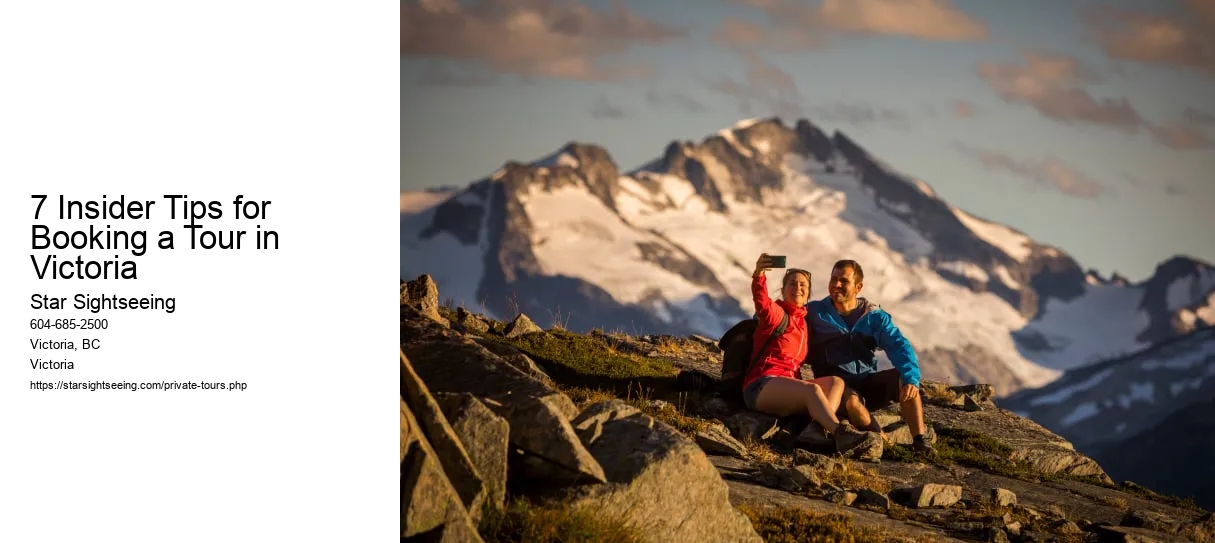
When planning a tour in Victoria, one of the smartest moves you can make is taking advantage of early bird discounts. Explore Victoria BC Guided Bus Tours here. These deals are a golden ticket to saving money while still enjoying all the splendors this beautiful region has to offer. But how do you really make the most of these offers? Lets dive into it!
First off, dont wait until the last minute to book your tour. Procrastination is not your friend here. Victoria boat tours Many companies offer substantial discounts for those who book in advance (sometimes months ahead!). So, if you know your travel dates, lock them in as soon as possible. Its not just about saving a few bucks; its about ensuring you get a spot on the tour you want. Popular tours fill up fast, and you dont want to miss out.
Another tip is to subscribe to newsletters or follow social media pages of tour companies. They often announce early bird specials through these channels. Imagine waking up one morning to find out your dream tour is available at a fraction of the cost-what a way to start the day! Not only do you get the chance to save money, but you also stay informed about new tours and updates.
Also, consider being flexible with your dates. Sometimes early bird discounts are available for specific times of the year, and if youre open to adjusting your schedule slightly, you can snag some great deals. Victoria scuba diving tours Who knows, you might even end up experiencing Victoria during a less crowded time, giving you a more intimate look at its beauty!
However, be wary of the terms and conditions. Victoria city tours Some early bird deals are non-refundable, so ensure your plans are firm before booking. Victoria spring sightseeingVictoria snowboard tours It would be a shame to lock in a great price only to lose it because your plans changed. And remember, these discounts arent just for saving money-they can also free up your budget to enjoy more activities or indulge in a fancier meal.
Lastly, dont hesitate to ask the tour operators about any potential discounts. Sometimes, they dont advertise all their deals, and a simple inquiry can lead to unexpected savings. A friendly conversation can go a long way in uncovering hidden gems.
In conclusion, making the most of early bird discounts when booking a tour in Victoria isnt just about saving money (though thats a big part of it!). Its about being proactive, staying informed, and being flexible in your plans.
Victoria summer sightseeing
Victoria Christmas market tours
Victoria sunset tours
Victoria urban exploration tours
Victoria brewery tours
Victoria scuba diving tours
Victoria history tours
Victoria fishing tours
Victoria local tour guides
Craigdarroch Castle tours
Victoria ghost tours
Victoria sightseeing on a budget
Victoria sightseeing bus
Victoria Christmas market tours
Victoria sunset tours
Victoria urban exploration tours
Victoria brewery tours
So, next time youre planning a trip, remember these tips and watch your travel dreams come to life without breaking the bank!
Understanding Cancellation Policies
Booking a tour in Victoria can be an exciting experience, but understanding cancellation policies is crucial to ensure you dont have any unexpected surprises. Many travelers overlook this aspect, thinking they wont need to cancel, but life happens, and plans change. Its always a good idea to read (and really understand) the fine print before you commit to a tour.
First off, not all cancellation policies are the same. Some companies might offer a full refund if you cancel 24 hours in advance, while others might require a weeks notice.
Victoria scuba diving tours
Victoria urban exploration tours
Victoria brewery tours
Indigenous cultural tours Victoria
Victoria festival experience tours
Victoria summer sightseeing
Victoria fall sightseeing
Victoria scuba diving tours
Victoria history tours
Victoria fishing tours
Victoria local tour guides
Craigdarroch Castle tours
Victoria ghost tours
Victoria sightseeing on a budget
Victoria sightseeing bus
Victoria Christmas market tours
Victoria sunset tours
Victoria urban exploration tours
Its important to know the exact terms before you book. Victoria botanical garden tours You wouldnt want to be caught off guard if you need to make last-minute changes.
Also, be aware that some tours have non-refundable deposits. These can be quite a shock if you suddenly decide you cant go.
Victoria snowboard tours
Victoria fall sightseeing
Victoria scuba diving tours
Victoria history tours
Victoria fishing tours
Victoria local tour guides
Craigdarroch Castle tours
Victoria ghost tours
Victoria sightseeing on a budget
Victoria sightseeing bus
Victoria Christmas market tours
Victoria sunset tours
Victoria urban exploration tours
Victoria brewery tours
Victoria boat tours
Victoria zipline tours
Victoria extreme sports tours
Victoria snowboard tours
Victoria spring sightseeing
Victoria private tours
Victoria harbor tours
Always check if theres a deposit and whether its refundable. If its not, well, you might wanna think twice before booking on a whim. Its not that you shouldnt pay deposits-sometimes theyre necessary-but you should know what youre getting into.
Moreover, see if theres any flexibility in the policy. Victoria summer sightseeing Some companies might allow you to reschedule instead of outright canceling. This can be a lifesaver if your plans change unexpectedly. But hey, dont assume every company will offer this option! Always ask, just in case.
Another thing to consider is travel insurance (which we often forget about). It can cover cancellations for reasons the tour operator wont, like personal emergencies or sudden changes in your schedule.
Victoria zipline tours
Victoria brewery tours
Victoria festival experience tours
Victoria summer sightseeing
Victoria fall sightseeing
Victoria scuba diving tours
Victoria history tours
Victoria fishing tours
Victoria local tour guides
Craigdarroch Castle tours
Victoria ghost tours
Victoria sightseeing on a budget
Victoria sightseeing bus
Victoria Christmas market tours
Victoria sunset tours
Victoria urban exploration tours
Victoria brewery tours
Victoria festival experience tours
While it might seem like an extra expense, it can save you a lot of money and stress in the long run. Who doesnt want a little peace of mind?
In the end, understanding cancellation policies isnt just about avoiding fees; its about being prepared for the unexpected. By taking the time to read and understand these policies, youll have a smoother, more enjoyable experience. After all, the goal is to enjoy your tour in Victoria without any unnecessary hassles, right?
So, next time youre booking a tour, dont just click accept without a second thought. Take the time to understand what youre agreeing to. It might not be the most exciting part of planning a trip, but its definitely one of the most important!
Leveraging Local Expertise
Booking a tour in Victoria, British Columbia can be an exhilarating experience, especially when you decide to leverage local expertise. Its not just about finding the right spots to visit, but also about understanding the local culture and vibe. You might think you know all there is to know about Victoria by reading online reviews or guidebooks, but trust me, theres nothing like insider tips to enhance your experience.
First off, locals have this knack for knowing the best times to visit popular attractions. (You dont want to be stuck in a crowd, do you?) They can tell you when the Butchart Gardens is less crowded or when the Inner Harbour offers the most breathtaking views without the hustle and bustle. And lets not forget about the hidden gems that arent listed in every travel guide. Victoria extreme sports tours Locals can point you to unique spots and eateries that are off the beaten path!
Another reason to rely on local expertise is to avoid common tourist traps. Its easy to fall into the trap of spending too much on overpriced attractions or meals, but a local can guide you to places that offer more value for your money. They might even know of special promotions or discounts that are available only to those in the know.
Victoria botanical garden tours
Victoria brewery tours
Victoria extreme sports tours
Victoria snowboard tours
Victoria spring sightseeing
Victoria private tours
Victoria harbor tours
Victoria city tours
West Victoria sightseeing tours
Victoria coastline tours
Indigenous cultural tours Victoria
Victoria festival experience tours
Victoria summer sightseeing
Victoria fall sightseeing
Victoria scuba diving tours
Victoria history tours
Victoria fishing tours
Victoria local tour guides
Craigdarroch Castle tours
Oh, the money youll save!
And speaking of food, Victorias culinary scene is just as diverse as its landscapes. While you might be tempted to stick to familiar cuisines, locals can introduce you to some of the most delicious local dishes. Whether its a seafood feast or a cozy cafe with the best coffee in town, their recommendations are invaluable. Plus, theyll probably know where to find the freshest ingredients!
Some folks might think that booking a tour through a local agency could be more expensive, but thats not always the case. Sometimes, these agencies have partnerships with local businesses, allowing them to offer exclusive deals that you wouldnt find elsewhere. And let's face it, who doesn't love a good bargain?
In conclusion, leveraging local expertise when booking a tour in Victoria can transform your trip from ordinary to extraordinary.
Victoria fall sightseeing
Victoria urban exploration tours
Victoria brewery tours
Victoria harbor tours
Victoria city tours
West Victoria sightseeing tours
Victoria coastline tours
Indigenous cultural tours Victoria
Victoria festival experience tours
Victoria summer sightseeing
Victoria fall sightseeing
Victoria scuba diving tours
Victoria history tours
Victoria fishing tours
Victoria local tour guides
Craigdarroch Castle tours
Victoria ghost tours
Victoria sightseeing on a budget
Victoria sightseeing bus
Victoria Christmas market tours
They know the ins and outs of the city like the back of their hand, and their insights can save you time, money, and hassle. So, why not take advantage of this insider knowledge?
Victoria private tours
Victoria Christmas market tours
Victoria sunset tours
Victoria urban exploration tours
Victoria brewery tours
Victoria coastline tours
Indigenous cultural tours Victoria
Victoria festival experience tours
Victoria summer sightseeing
Victoria fall sightseeing
Victoria scuba diving tours
Victoria history tours
Victoria fishing tours
Victoria local tour guides
Craigdarroch Castle tours
Victoria ghost tours
Victoria sightseeing on a budget
Victoria sightseeing bus
Victoria Christmas market tours
Victoria sunset tours
After all, a little local wisdom goes a long way!
Packing Essentials for Your Victoria Tour
Planning a tour to Victoria can be quite an adventure!
Victoria zipline tours
Victoria summer sightseeing
Victoria fall sightseeing
Victoria scuba diving tours
Victoria history tours
Victoria fishing tours
Victoria local tour guides
Craigdarroch Castle tours
Victoria ghost tours
Victoria sightseeing on a budget
Victoria sightseeing bus
Victoria Christmas market tours
Victoria sunset tours
Victoria urban exploration tours
Victoria brewery tours
Victoria summer sightseeing
Victoria fall sightseeing
Victoria scuba diving tours
Victoria history tours
Victoria fishing tours
But before you dive into the wonders of this beautiful region, its crucial to know what to pack for your trip. After all, you dont want to find yourself unprepared. Packing essentials for your Victoria tour might not be as straightforward as you think, so here are some insider tips to make sure youre ready for anything that comes your way.
First things first, the weather in Victoria can be unpredictable. (Dont trust the forecast too much!) Its wise to pack layers, even if the season is supposed to be warm. A lightweight jacket or a cozy sweater can save you from chilly evenings. You dont want to be shivering when youre trying to enjoy the sunset by the harbor.
Now, lets talk about footwear. Those cobblestone streets and charming alleys may look picturesque, but they can be tough on your feet. Comfortable walking shoes are a must! You wont enjoy your tour if youre constantly dealing with blisters. And let's not forget a pair of sandals or flip-flops for those casual beach moments.
You might think you dont need to carry much cash anymore, but hold on! Its still handy to have some local currency for small purchases or tips. Not all places accept cards, and sometimes, technology just fails us when we need it the most.
Dont forget a reusable water bottle. Staying hydrated is key, especially if youre planning to explore the trails and parks. Its not only eco-friendly, but it also saves you from buying overpriced bottled water. Who wants to waste money on that?
One thing tourists often overlook is a small backpack or day bag. You'll want something to carry your daily essentials like maps, snacks, and sunglasses. Trust me, stuffing everything into your pockets is not a good idea!
If youre a photography enthusiast, remember to bring your camera along with extra batteries or a portable charger. You dont want to miss capturing the stunning landscapes Victoria has to offer. And while most people rely on their smartphones, nothing beats the quality of a good camera.
Lastly, dont assume youll have internet access everywhere. Download maps or guides ahead of time. Its frustrating when youre trying to find your way and your phone just wont cooperate because theres no signal.
In conclusion, packing for a Victoria tour requires a bit of thought and preparation, but its worth it! By following these tips, youll ensure a stress-free and enjoyable trip. Remember, its better to be overprepared than underprepared. Victoria harbor tours Happy travels!
Victoria is the capital city of the Canadian province of British Columbia, on the southern tip of Vancouver Island off Canada's Pacific coast. The city has a population of 91,867, and the Greater Victoria area has a population of 397,237. The city of Victoria is the seventh most densely populated city in Canada with 4,406 inhabitants per square kilometre (11,410/sq mi).
Looking at Times Square in New York City, the world's busiest tourist attraction, from north (top) and south (below)
Tourism is travel for pleasure, and the commercial activity of providing and supporting such travel.[1]UN Tourism defines tourism more generally, in terms which go "beyond the common perception of tourism as being limited to holiday activity only", as people "travelling to and staying in places outside their usual environment for not more than one consecutive year for leisure and not less than 24 hours, business and other purposes".[2] Tourism can be domestic (within the traveller's own country) or international. International tourism has both incoming and outgoing implications on a country's balance of payments.
Between the second half of 2008 and the end of 2009, tourism numbers declined due to a severe economic slowdown (see Great Recession) and the outbreak of the 2009 H1N1 influenza virus.[3][4] These numbers, however, recovered until the COVID-19 pandemic put an abrupt end to the growth.[5] The United Nations World Tourism Organization has estimated that global international tourist arrivals might have decreased by 58% to 78% in 2020, leading to a potential loss of US$0.9–1.2 trillion in international tourism receipts.[6]
Globally, international tourism receipts (the travel item in the balance of payments) grew to US$1.03 trillion (€740 billion) in 2005, corresponding to an increase in real terms of 3.8% from 2010.[7] International tourist arrivals surpassed the milestone of 1 billion tourists globally for the first time in 2012.[8] Emerging source markets such as China, Russia, and Brazil had significantly increased their spending over the previous decade.[9]
Global tourism accounts for c. 8% of global greenhouse-gas emissions.[10] Emissions as well as other significant environmental and social impacts are not always beneficial to local communities and their economies. Many tourist development organizations are shifting focus to sustainable tourism to minimize the negative effects of growing tourism. This approach aims to balance economic benefits with environmental and social responsibility. The United Nations World Tourism Organization emphasized these practices by promoting tourism as part of the Sustainable Development Goals, through programs such as the International Year for Sustainable Tourism for Development in 2017.[11]
The English-language word tourist was used in 1772[12] and tourism in 1811.[13][14] These words derive from the word tour, which comes from Old Englishturian, from Old French torner, from Latin tornare, "to turn on a lathe", which is itself from Ancient Greektornos (τόρνος), "lathe".[15]
In 1936, the League of Nations defined a foreign tourist as "someone traveling abroad for at least twenty-four hours". Its successor, the United Nations, amended this definition in 1945, by including a maximum stay of six months.[16]
In 1941, Hunziker and Kraft defined tourism as "the sum of the phenomena and relationships arising from the travel and stay of non-residents, insofar as they do not lead to permanent residence and are not connected with any earning activity."[17][18] In 1976, the Tourism Society of England's definition was: "Tourism is the temporary, short-term movement of people to destinations outside the places where they normally live and work and their activities during the stay at each destination. It includes movements for all purposes."[19] In 1981, the International Association of Scientific Experts in Tourism defined tourism in terms of particular activities chosen and undertaken outside the home.[20]
In 1994, the United Nations identified three forms of tourism in its Recommendations on Tourism Statistics:[21]
Domestic tourism, involving residents of the given country traveling only within this country
Inbound tourism,[22] involving non-residents traveling into the given country
Outbound tourism, involving residents traveling to another country
Other groupings derived from the above grouping:[23]
National tourism, a combination of domestic and outbound tourism
Regional tourism, a combination of domestic and inbound tourism
Tourism has reached new dimensions with the emerging industry of space tourism, as well as the transoceanic cruise ship industry.
The terms tourism and travel are sometimes used interchangeably. In this context, travel has a similar definition to tourism but implies a more purposeful journey. The terms tourism and tourist are sometimes used pejoratively, to imply a shallow interest in the cultures or locations visited. By contrast, traveller is often used as a sign of distinction. The sociology of tourism has studied the cultural values underpinning these distinctions and their implications for class relations.[24]
The first sunrise seen from the torii gate on the sea, which is considered a sacred place (Ōarai in Japan)
There are many varieties of tourism. Of those types, there are multiple forms of outdoor-oriented tourism. Outdoor tourism is generally categorized into nature, eco, and adventure tourism (NEAT). These categories share many similarities but also possess definite and unique characteristics. Nature tourism generally encompasses tourism activities that would take place outside. Nature tourism appeals to a large audience of tourists and many may not know they are participating in this form of tourism. This type of tourism has a low barrier to entry and is accessible to a large population. Ecotourism focuses on education, maintaining a social responsibility for the community and the environment, as well as centering economic growth around the local economy. Weaver describes ecotourism as sustainable nature-based tourism.[25] Ecotourism is more specific than nature tourism and works toward accomplishing a specific goal through the outdoors. Finally, we have adventure tourism. Adventure tourism is the most extreme of the categories and includes participation in activities and sports that require a level of skill or experience, risk, and physical exertion.[25] Adventure tourism often appeals less to the general public than nature and ecotourism and tends to draw in individuals who partake in such activities with limited marketing.
It is important to understand that these definitions may vary. Perceived risk in adventure tourism is subjective and may change for each individual.
"a combination of tangible and intangible elements, such as natural, cultural, and man-made resources, attractions, facilities, services and activities around a specific center of interest which represents the core of the destination marketing mix and creates an overall visitor experience including emotional aspects for the potential customers. A tourism product is priced and sold through distribution channels and it has a life-cycle."
A tourist map shows the functional zones of a city.[27] Tourism products cover a wide variety of services including:[28]
Accommodation services from low-cost homestays to five-star hotels
Hospitality services including food and beverage serving centers
International tourism is tourism that crosses national borders. Globalization has made tourism a popular global leisure activity. The World Tourism Organization defines tourists as people "traveling to and staying in places outside their usual environment for not more than one consecutive year for leisure, business and other purposes".[29] The World Health Organization (WHO) estimates that up to 500,000 people are in flight at any one time.[30]
In 2010, international tourism reached US$919B, growing 6.5% over 2009, corresponding to an increase in real terms of 4.7%.[31] In 2010, there were over 940 million international tourist arrivals worldwide.[32] By 2016 that number had risen to 1,235 million, producing $1.22 trillion USD in destination spending.[33] The COVID-19 crisis had significant negative effects on international tourism significantly slowing the overall increasing trend.
International tourism has significant impacts on the environment, exacerbated in part by the problems created by air travel but also by other issues, including wealthy tourists bringing lifestyles that stress local infrastructure, water and trash systems among others. In many countries, there have been protests against Air bnb tourism raising rents.
Tourism typically requires the tourist to feel engaged in a genuine experience of the location they are visiting. According to Dean MacCannell, tourism requires that the tourist can view the toured area as both authentic and different from their own lived experience.[34][35]: 113 [better source needed] By viewing the "exotic," tourists learn what they themselves are not: that is, they are "un-exotic," or normal.[35][better source needed]
According to MacCannell, all modern tourism experiences the "authentic" and "exotic" as "developmentally inferior" to the modern—that is, to the lived experience of the tourist.[35]: 114 [better source needed]
Travel outside a person's local area for leisure was largely confined to wealthy classes, who at times travelled to distant parts of the world, to see great buildings and works of art, learn new languages, experience new cultures, enjoy pristine nature and to taste different cuisines. As early as Shulgi, however, kings praised themselves for protecting roads and building way stations for travellers. Travelling for pleasure can be seen in Egypt as early on as 1500 BC. Ancient Roman tourists during the Republic would visit spas and coastal resorts such as Baiae. The Roman upper class used to spend their free time on land or at sea and travelled to their villa urbana or villa maritima. Numerous villas were located in Campania, around Rome and in the northern part of the Adriatic as in Barcola near Trieste. Pausanias wrote his Description of Greece in the second century AD. In ancient China, nobles sometimes made a point of visiting Mount Tai and, on occasion, all five Sacred Mountains.
In medieval Italy, Petrarch wrote an allegorical account of his 1336 ascent of Mont Ventoux that praised the act of travelling and criticized frigida incuriositas (a 'cold lack of curiosity'); this account is regarded as one of the first known instances of travel being undertaken for its own sake.[36][37] The Burgundian poet Michault Taillevent [fr] later composed his own horrified recollections of a 1430 trip through the Jura Mountains.[38]
In China, 'travel record literature' (遊記文學; yóujì wénxué) became popular during the Song Dynasty (960–1279).[39] Travel writers such as Fan Chengda (1126–1193) and Xu Xiake (1587–1641) incorporated a wealth of geographical and topographical information into their writing, while the 'daytrip essay' Record of Stone Bell Mountain by the noted poet and statesman Su Shi (1037–1101) presented a philosophical and moral argument as its central purpose. [40]
The custom flourished from about 1660 until the advent of large-scale rail transit in the 1840s and generally followed a standard itinerary. It was an educational opportunity and rite of passage. Though primarily associated with the British nobility and wealthy landed gentry, similar trips were made by wealthy young men of ProtestantNorthern European nations on the Continent, and from the second half of the 18th century some South American, US, and other overseas youth joined in. The tradition was extended to include more of the middle class after rail and steamship travel made the journey easier, and Thomas Cook made the "Cook's Tour" a byword.
The Grand Tour became a status symbol for upper-class students in the 18th and 19th centuries. In this period, Johann Joachim Winckelmann's theories about the supremacy of classic culture became very popular and appreciated in the European academic world. Artists, writers, and travellers (such as Goethe) affirmed the supremacy of classic art of which Italy, France, and Greece provide excellent examples. For these reasons, the Grand Tour's main destinations were to those centers, where upper-class students could find rare examples of classic art and history.
Three hundred years ago, wealthy young Englishmen began taking a post-Oxbridge trek through France and Italy in search of art, culture and the roots of Western civilization. With nearly unlimited funds, aristocratic connections and months (or years) to roam, they commissioned paintings, perfected their language skills and mingled with the upper crust of the Continent.
The primary value of the Grand Tour, it was believed, laid in the exposure both to the cultural legacy of classical antiquity and the Renaissance, and to the aristocratic and fashionably polite society of the European continent.
English postcard of the old town of Alsfeld in Germany, with tourists on the market squareThe Slatina Spa in Slatina, Bosnia and Herzegovina, is famous for its characteristics and had attracted tourists since 1870s.
Leisure travel was associated with the Industrial Revolution in the United Kingdom – the first European country to promote leisure time to the increasing industrial population.[44] Initially, this applied to the owners of the machinery of production, the economic oligarchy, factory owners and traders. These comprised the new middle class.[44]Cox & Kings was the first official travel company to be formed in 1758.[45]
The British origin of this new industry is reflected in many place names. In Nice, France, one of the first and best-established holiday resorts on the French Riviera, the long esplanade along the seafront is known to this day as the Promenade des Anglais; in many other historic resorts in continental Europe, old, well-established palace hotels have names like the Hotel Bristol, Hotel Carlton, or Hotel Majestic – reflecting the dominance of English customers.
A pioneer of the travel agency business, Thomas Cook's idea to offer excursions came to him while waiting for the stagecoach on the London Road at Kibworth. With the opening of the extended Midland Counties Railway, he arranged to take a group of 540 temperance campaigners from LeicesterCampbell Street station to a rally in Loughborough, eleven miles (18 km) away. On 5 July 1841, Thomas Cook arranged for the rail company to charge one shilling per person; this included rail tickets and food for the journey. Cook was paid a share of the fares charged to the passengers, as the railway tickets, being legal contracts between company and passenger, could not have been issued at his own price.[clarification needed] This was the first privately chartered excursion train to be advertised to the general public; Cook himself acknowledged that there had been previous, unadvertised, private excursion trains.[46] During the following three summers he planned and conducted outings for temperance societies and Sunday school children. In 1844, the Midland Counties Railway Company agreed to make a permanent arrangement with him, provided he found the passengers. This success led him to start his own business running rail excursions for pleasure, taking a percentage of the railway fares.[47]
In 1855, he planned his first excursion abroad, when he took a group from Leicester to Calais to coincide with the Paris Exhibition. The following year he started his "grand circular tours" of Europe.[48] During the 1860s he took parties to Switzerland, Italy, Egypt, and the United States. Cook established "inclusive independent travel", whereby the traveller went independently but his agency charged for travel, food, and accommodation for a fixed period over any chosen route. Such was his success that the Scottish railway companies withdrew their support between 1862 and 1863 to try the excursion business for themselves.
Le charmeur de serpents by Jean-Léon Gérôme (c. 1879).La Toilette au Harem by Gaspard de Toursky, 20th century.
Although tourism is more often associated with cultural appreciation and leisure, it is also directly connected with power dynamics, cultural representations, and conflicts.[49] As a matter of fact, tourism developed alongside violent colonial domination in many regions of the world.[50] Colonial authorities often developed transportation infrastructure that facilitated the growth of tourism, while simultaneously promoting racialized and demeaning representations of native populations.[51]
The violence of the colonial powers was justified by labelling European culture as superior and civilized, while labeling others as inferior, uncivilized and in-need of domestication.[52] European people often depicted non-European peoples and cultures as fundamentally different and inferior, establishing hierarchical representations of societies in various kinds of media such as academic books, travel journals, and travel guidebooks.[53][54][55] By portraying colonized societies as inferior on the hierarchy of cultural value, they "othered" these populations.[56] The concept of "othering" refers to the representation of individuals and cultures in a way that simultaneously romanticizes and devalues them, with the goal of establishing dominance.[57] "Othering" also refers to representing peoples while ignoring their own self-representations.[58]
Cook's Oriental Travellers Gazette, 1892.
In the 19th century, in order to foster the development of tourism in the colonies, touristic enterprises used tourist media to present them as attractive destinations for European travelers.[59] Consequently, tourism media not only promoted the colonies as touristic destinations and helped shape popular conceptions about them, but also helped consolidate ideas of Western cultural superiority.[60][61] One notable example is Thomas Cook's travel enterprise established in the United Kingdom in 1841 and his travel newspaper called “The Excursionist”.[62][63]Thomas Cook enterprise promoted touristic excursions and package tours all over the world. In the case of the tour to Egypt, Thomas Cook & Son’s promotional materials aimed to portray it as an “out-of-the-ordinary”, wild, yet safe and domesticated destination, appealing to European tourists’ desire for both familiarity and adventure.[64]Thomas Cook & Son collaboration with the British Empire during the occupation of Egypt facilitated European access to the Middle East through the construction of transportation networks such as steamships on the River Nile.[65][66] At the same time, it reinforced Eurocentric and imperial politics.[67][68]
These narratives, as reflected in travel guidebooks present in the Orientalist collection, often reveal more about the symbolic authority of European powers over colonized regions than they do about the actual cultures depicted.[69] The process of othering and categorizing societies into simplistic binary oppositions—such as civilized/primitive and superior/inferior — contributes to the perpetuation of imperialist ideologies because it silences the voices of local communities and obscures their cultural complexity.[70]
Prior to the Civil Rights Act, Black travellers encountered specific challenges when travelling within the United States.[72]Jim Crow legislation enforced racial segregation in numerous public spaces, including public transport, accommodation, and tourist sites in general.[73][72]
The Negro Motorist Green Book was a travel guide published from 1936 to 1967 by Victor and Alma Duke Green. It was aimed at Black travellers in the United States during the era of segregation and listed places where Black travellers were welcome.[74] Several major companies collaborated with the Green Book. For instance, the Esso Standard Oil Company placed advertisements in the Green Book and sold it at their nationwide gas stations.[74]
Cultural and natural heritage are in many cases the absolute basis for worldwide tourism. Cultural tourism is one of the mega-trends that is reflected in massive numbers of overnight stays and sales. As UNESCO is increasingly observing, the cultural heritage is needed for tourism, but also endangered by it. The "ICOMOS - International Cultural Tourism Charter" from 1999 is already dealing with all of these problems. As a result of the tourist hazard, for example, the Lascaux cave was rebuilt for tourists. Overtourism is an important buzzword in this area. Furthermore, the focus of UNESCO in war zones is to ensure the protection of cultural heritage in order to maintain this future important economic basis for the local population. And there is intensive cooperation between UNESCO, the United Nations, the United Nations peacekeeping and Blue Shield International. There are extensive international and national considerations, studies and programs to protect cultural assets from the effects of tourism and those from war. In particular, it is also about training civilian and military personnel. But the involvement of the locals is particularly important. The founding president of Blue Shield International Karl von Habsburg summed it up with the words: "Without the local community and without the local participants, that would be completely impossible'.[75][76][77][78]
Tourists at the Mediterranean Coast of Barcelona 2007
Mass tourism and its tourist attractions have emerged as among the most iconic demonstration of western consumer societies.[79] Academics have defined mass tourism as travel by groups on pre-scheduled tours, usually under the organization of tourism professionals. This form of tourism developed during the second half of the 19th century in the United Kingdom and was pioneered by Thomas Cook. Cook took advantage of Europe's rapidly expanding railway network and established a company that offered affordable day trip excursions to the masses, in addition to longer holidays to Continental Europe, India, Asia and the Western Hemisphere which attracted wealthier customers. By the 1890s over 20,000 tourists per year used Thomas Cook & Son.
The relationship between tourism companies, transportation operators and hotels is a central feature of mass tourism. Cook was able to offer prices that were below the publicly advertised price because his company purchased large numbers of tickets from railroads. One contemporary form of mass tourism, package tourism, still incorporates the partnership between these three groups.
Travel developed during the early 20th century and was facilitated by the development of the automobiles and later by airplanes. Improvements in transport allowed many people to travel quickly to places of leisure interest so that more people could begin to enjoy the benefits of leisure time.
By the mid-20th century, the Mediterranean Coast became the principal mass tourism destination. The 1960s and 1970s saw mass tourism play a major role in the Spanish economic "miracle".[80]
In the 1960s and 1970s, scientists discussed negative socio-cultural impacts of tourism on host communities. Since the 1980s the positive aspects of tourism began to be recognized as well.[81]
In more recent times, mass tourism is something which has become a negative experience for local residents of cities and destinations that experience heavy tourism, especially in summer months. In July 2024 for example, protests by local residents in Barcelona, Spain were held in the city, where ″thousands of people joined an anti-tourism protest amid rising housing costs.″[82]
Niche tourism refers to the specialty forms of tourism that have emerged over the years, each with its own adjective. Many of these terms have come into common use by the tourism industry and academics.[83] Others are emerging concepts that may or may not gain popular usage. Examples of the more common niche tourism markets are:
Other terms used for niche or specialty travel forms include the term "destination" in the descriptions, such as destination weddings, and terms such as location vacation.
There has been a limited amount of orbital space tourism, with only the Russian Space Agency providing transport to date. A 2010 report into space tourism anticipated that it could become a billion-dollar market by 2030.[84][85] The space market has been around since 1979, however, there has been a limited amount of orbital space tourism, with only the Russian Space Agency providing transport on its Soyuz and the Chinese Shenzhou being the only two spacecrafts suitable for human travel . In April 2001, Dennis Tito, a customer of the Russian Soyuz became the first tourist to visit space. In May 2011, Virgin Galactic launched its SpaceShipTwo plane that allows people to travel 2 hours space at the advertised price of $200,000 per seat. A challenge that the commercial space tourism industry faces is to be able to have fundings from private investments needed to lower the cost of access to space in addition to being able to encourage both private and public sector support to increase capacity to allow commercial passengers. With space tourism still being new concept, there are many factors that needs to be considered for the industry. From its actual demand to its risk factor to its liabilities and insurance issues, there are still a lot of research that needs to be conducted. A 2010 report into space tourism anticipated that the industry is expected to grow by 18% - 26% per year during 2020 to 2030.
Sports tourism that attracts spectators is associated with negative impacts such as traffic congestion, vandalism, and anti-social behaviour. Sports tourist destinations may therefore be subject public displays of resentment and antagonism even though the host community benefits substantially. Sports tourism growth and decline can be subject to international commercial sporting events. For example, the irreversible environmental damage caused by the 1992 Winter Olympics is cited as a reason for stagnating ski tourism.[86]
St. Moritz, Switzerland became the cradle of the developing winter tourism in the 1860s: hotel manager Johannes Badrutt invited some summer guests from England to return in the winter to see the snowy landscape, thereby inaugurating a popular trend.[91][92] It was, however, only in the 1970s when winter tourism took over the lead from summer tourism in many of the Swiss ski resorts. Even in winter, up to one third of all guests (depending on the location) consist of non-skiers.[93]
There has been an up-trend in tourism over the last few decades,[vague] especially in Europe, where international travel for short breaks is common. Tourists have a wide range of budgets and tastes, and a wide variety of resorts and hotels have developed to cater for them. For example, some people prefer simple beach vacations, while others want more specialized holidays, quieter resorts, family-oriented holidays, or niche market-targeted destination hotels.
The developments in air transport infrastructure, such as jumbo jets, low-cost airlines, and more accessibleairports have made many types of tourism more affordable. A major factor in the relatively low cost of air travel is the tax exemption for aviation fuels. The WHO estimated in 2009 that there are around half a million people on board aircraft at any given time.[30] There have also been changes in lifestyle, for example, some retirement-age people sustain year-round tourism. This is facilitated by internet sales of tourist services. Some sites have now started to offer dynamic packaging, in which an inclusive price is quoted for a tailor-made package requested by the customer upon impulse.
Individual low-price or even zero-price overnight stays have become more popular in the 2000s, especially with a strong growth in the hostel market and services like CouchSurfing and airbnb being established.[95] There has also been examples of jurisdictions wherein a significant portion of GDP is being spent on altering the primary sources of revenue towards tourism, as has occurred for instance in Dubai.[96]
A canopy walkway at Kakum National Park in Ghana, ensuring that tourists have least direct impact on the surrounding ecology. The visitor park received the Global Tourism for Tomorrow Award in 1998.
Sustainable tourism is a concept that covers the complete tourism experience, including concern for economic, social, and environmental issues as well as attention to improving tourists' experiences and addressing the needs of host communities.[97] Sustainable tourism should embrace concerns for environmental protection, social equity, and the quality of life, cultural diversity, and a dynamic, viable economy delivering jobs and prosperity for all.[98] It has its roots in sustainable development and there can be some confusion as to what "sustainable tourism" means.[99]: 23 There is now broad consensus that tourism should be sustainable.[100][101] In fact, all forms of tourism have the potential to be sustainable if planned, developed and managed properly.[99] Tourist development organizations are promoting sustainable tourism practices in order to mitigate negative effects caused by the growing impact of tourism, for example its environmental impacts.
The United Nations World Tourism Organization emphasized these practices by promoting sustainable tourism as part of the Sustainable Development Goals, through programs like the International Year for Sustainable Tourism for Development in 2017.[102] There is a direct link between sustainable tourism and several of the 17 Sustainable Development Goals (SDGs).[99]: 26 Tourism for SDGs focuses on how SDG 8 ("decent work and economic growth"), SDG 12 ("responsible consumption and production") and SDG 14 ("life below water") implicate tourism in creating a sustainable economy.[103] According to the World Travel & Tourism Travel, tourism constituted "10.3 percent to the global gross domestic product, with international tourist arrivals hitting 1.5 billion marks (a growth of 3.5 percent) in 2019" and generated $1.7 trillion export earnings yet, improvements are expected to be gained from suitable management aspects and including sustainable tourism as part of a broader sustainable development strategy.[104]
Ecotourism, also known as ecological tourism, is responsible travel to fragile, pristine, and usually protected areas that strives to be low-impact and (often) small-scale. It helps educate the traveller; provides funds for conservation; directly benefits the economic development and political empowerment of local communities, and fosters respect for different cultures and for human rights. Take only memories and leave only footprints is a very common slogan in protected areas.[105] Tourist destinations are shifting to low carbon emissions following the trend of visitors more focused in being environmentally responsible adopting a sustainable behavior.[106]
Volunteer tourism (or voluntourism) is growing as a largely Western phenomenon, with volunteers travelling to aid those less fortunate than themselves to counter global inequalities. Volunteer tourism is defined as applying "to those tourists who, for various reasons, volunteer in an organised way to undertake holidays that might involve aiding or alleviating the material poverty of some groups in society" (Wearing 2001). VSO founded in 1958 in the UK and the US Peace Corps founded in 1958 were the first large-scale voluntary organisations sending groups, initially arising to modernise less economically developed countries, which it was hoped would curb the influence of communism.
This form of tourism is largely praised for being a more sustainable approach to travel, with tourists attempting to assimilate into local cultures and avoiding the criticism of consumptive, exploitative mass tourism. However, increasingly, voluntourism is being criticised by scholars who suggest that volunteer tourism may have negative effects as it begins to undermine local labour and force unwilling host communities to adopt Western initiatives. While host communities without a strong heritage fail to retain volunteers who become dissatisfied with their experiences, volunteer shortages persist. Increasingly, organisations such as VSO have been concerned with community-centric volunteer programmes where power to control the future of the community is in the hands of local people.
Pro-poor tourism, which seeks to help the poorest people in developing countries, has been receiving increasing attention by those involved in development; the issue has been addressed through small-scale projects in local communities and through attempts by Ministries of Tourism to attract large numbers of tourists.[107] Research by the Overseas Development Institute suggests that neither is the best way to encourage tourists' money to reach the poorest as only 25% or less (far less in some cases) ever reaches the poor; successful examples of money reaching the poor include mountain-climbing in Tanzania and cultural tourism in Luang Prabang, Laos.[108] There is also the possibility of pro-poor tourism principles being adopted in centre sites of regeneration in the developed world.[109]
Recession tourism is a travel trend which evolved by way of the world economic crisis. Recession tourism is defined by low-cost and high-value experiences taking place at once-popular generic retreats. Various recession tourism hotspots have seen business boom during the recession thanks to comparatively low costs of living and a slow world job market suggesting travellers are elongating trips where their money travels further. This concept is not widely used in tourism research. It is related to the short-lived phenomenon that is more widely known as staycation. In general, studies have primarily focused on the short-term effects of the crisis on tourism demand, often overlooking the long-term implications for the competitive positioning of the impacted destinations.[110]
When there is a significant price difference between countries for a given medical procedure, particularly in Southeast Asia, India, Sri Lanka, Eastern Europe, Cuba[111] and Canada[112] where there are different regulatory regimes, in relation to particular medical procedures (e.g. dentistry), travelling to take advantage of the price or regulatory differences is often referred to as "medical tourism".
Educational tourism is developed because of the growing popularity of teaching and learning of knowledge and the enhancing of technical competency outside of the classroom environment. Brent W. Ritchie, publisher of Managing Educational Tourism, created a study of a geographic subdivision to demonstrate how tourism educated high school students participating in foreign exchange programs over the last 15 years.[113] In educational tourism, the main focus of the tour or leisure activity includes visiting another country to learn about the culture, study tours, or to work and apply skills learned inside the classroom in a different environment, such as in the International Practicum Training Program.[114] In 2018, one impact was many exchange students traveled to America to assist students financially in order to maintain their secondary education.[115]
This type of tourism is focused on tourists coming into a region to either participate in an event or to see an organized event put on by the city/region.[116] This type of tourism can also fall under sustainable tourism as well and companies that create a sustainable event to attend open up a chance to not only the consumer but their workers to learn and develop from the experience. Creating a sustainable atmosphere creates a chance to inform and encourage sustainable practices. An example of event tourism would be the music festival South by Southwest that is hosted in Austin, Texas annually. Every year people from all over the world flock to the city for one week to sit in on technology talks and see bands perform. People are drawn here to experience something that they are not able to experience in their hometown, which defines event tourism.
Creative tourism has existed as a form of cultural tourism, since the early beginnings of tourism itself. Its European roots date back to the time of the Grand Tour, which saw the sons of aristocratic families travelling for the purpose of mostly interactive, educational experiences. More recently, creative tourism has been given its own name by Crispin Raymond and Greg Richards,[117] who as members of the Association for Tourism and Leisure Education (ATLAS), have directed a number of projects for the European Commission, including cultural and crafts tourism, known as sustainable tourism. They have defined "creative tourism" as tourism related to the active participation of travellers in the culture of the host community, through interactive workshops and informal learning experiences.[117]
Meanwhile, the concept of creative tourism has been picked up by high-profile organizations such as UNESCO, who through the Creative Cities Network, have endorsed creative tourism as an engaged, authentic experience that promotes an active understanding of the specific cultural features of a place. UNESCO wrote in one of its documents: "'Creative Tourism' involves more interaction, in which the visitor has an educational, emotional, social, and participative interaction with the place, its living culture, and the people who live there. They feel like a citizen."[118] Saying so, the tourist will have the opportunity to take part in workshops, classes and activities related to the culture of the destination.
More recently, creative tourism has gained popularity as a form of cultural tourism, drawing on active participation by travellers in the culture of the host communities they visit. Several countries offer examples of this type of tourism development, including the United Kingdom, Austria, France, the Bahamas, Jamaica, Spain, Italy, New Zealand and South Korea.[119][120]
The growing interest of tourists[121] in this new way to discover a culture regards particularly the operators and branding managers, attentive to the possibility of attracting a quality tourism, highlighting the intangible heritage (craft workshops, cooking classes, etc.) and optimizing the use of existing infrastructure (for example, through the rent of halls and auditoriums).
Experiential travel (or "immersion travel") is one of the major market trends in the modern tourism industry. It is an approach to travelling which focuses on experiencing a country, city or particular place by connecting to its history, people, food and culture.[122]
The term "experiential travel" has been mentioned in publications since 1985,[123] but it was not discovered as a meaningful market trend until much later.
One emerging area of special interest has been identified by Lennon and Foley (2000)[124][125] as "dark" tourism. This type of tourism involves visits to "dark" sites, such as battlegrounds, scenes of horrific crimes or acts of genocide, for example concentration camps. Its origins are rooted in fairgrounds and medieval fairs.[126]
Social tourism is making tourism available to poor people who otherwise could not afford to travel for their education or recreation. It includes youth hostels and low-priced holiday accommodation run by church and voluntary organisations, trade unions, or in Communist times publicly owned enterprises. In May 1959, at the second Congress of Social Tourism in Austria, Walter Hunziker proposed the following definition: "Social tourism is a type of tourism practiced by low-income groups, and which is rendered possible and facilitated by entirely separate and therefore easily recognizable services".[127]
Also known as "tourism of doom," or "last chance tourism", involves travelling to places that are environmentally or otherwise threatened (such as the ice caps of Mount Kilimanjaro, the melting glaciers of Patagonia, or the coral of the Great Barrier Reef) before it is too late. The trend emerged in the 21st century, identified in 2007 by travel trade magazine in 2007[128] and explored in The New York Times,[129] This type of tourism has been on the rise. Some see the trend as related to sustainable tourism or ecotourism due to the fact that a number of these tourist destinations are considered threatened by environmental factors such as global warming, overpopulation or climate change. Others worry that travel to many of these threatened locations increases an individual's carbon footprint and only hastens problems threatened locations are already facing.[130][131][132] As of 2024, climate change has been making Last Chance Tourism more popular, and riskier. In August 2024, an American was killed visiting an ice cave at the foot of the Breidamerkurjokull glacier.[133]
St. Peter's Basilica in Vatican City, the papal enclave within the Italian city of Rome, one of the largest religious tourism sites in the world
Religious tourism, in particular pilgrimage, can serve to strengthen faith and to demonstrate devotion.[134] Religious tourists may seek destinations whose image encourages them to believe that they can strengthen the religious elements of their self-identity in a positive manner. Given this, the perceived image of a destination may be positively influenced by whether it conforms to the requirements of their religious self-identity or not.[135]
DNA tourism, also called "ancestry tourism" or "heritage travel", is tourism based on DNA testing. These tourists visit their remote relatives or places where their ancestors came from, or where their relatives reside, based on the results of DNA tests. DNA tourism became a growing trend in 2019.[136][137]
Sleep tourism focuses on medical treatments or other approaches, and may focus on people who have difficulty falling asleep, people who experience interrupted sleep, people who don't feel rested after sleeping, snoring, breathing difficulties, and dreaming.[138]
Tourism has a significant impact on destinations, influencing their economy, culture, environment, and communities. Tourism positively affects many parties in society but can also be detrimental in certain situations.
In general, tourism positively affects the economy of its destination. The purchasing of commodities, and the usage of hotels and transport by tourists all contribute to economic activity within the country.
The sociocultural impacts of tourism are less straightforward, bringing both benefits and challenges to the destination. The interactions between tourists and locals foster a cultural exchange, particularly exposing tourists to a different culture through direct interactions and overall immersion. However, differing expectations in the societal and moral values of the tourists and those from the host location can cause friction between the two parties.
While tourism may have positive impacts environmentally, through an increase in awareness of certain environmental issues, tourism overall negatively impacts the environment. Tourist destinations and attractions located in the wild may neglect environmental concerns to satisfy the demands of tourists, creating issues such as pollution and deforestation.
Tourism also has positive and negative health outcomes for local people.[139] The short-term negative impacts of tourism on residents' health are related to the density of tourist arrivals, the risk of disease transmission, road accidents, higher crimelevels, as well as traffic congestion, crowding, and other stressful factors.[140] In addition, residents can experience anxiety and depression related to their risk perceptions about mortality rates, food insecurity, contact with infected tourists, etc.[141] At the same time, there are positive long-term impacts of tourism on residents' health and well-being outcomes through improving healthcare access, positive emotions, novelty, and social interactions.
The tourism industry, as part of the service sector,[142] has become an important source of income for many regions and even for entire countries. The Manila Declaration on World Tourism of 1980 recognized its importance as "an activity essential to the life of nations because of its direct effects on the social, cultural, educational, and economic sectors of national societies, and on their international relations."[2][143]
Tourism brings large amounts of income into a local economy in the form of payment for goods and services needed by tourists, accounting as of 2011[update] for 30% of the world's trade in services, and, as an invisible export, for 6% of overall exports of goods and services.[7] It also generates opportunities for employment in the service sector of the economy associated with tourism.[144] It is also claimed that travel broadens the mind.[145][146]
On the flip-side, tourism can degrade people[147] and sour relationships between host and guest.[148] Tourism frequently also puts additional pressure on the local environment.[149]
The economic foundations of tourism are essentially the cultural assets, the cultural property and the nature of the travel location. The World Heritage Sites are particularly worth mentioning today because they are real tourism magnets. But even a country's current or former form of government can be decisive for tourism. For example, the fascination of the British royal family brings millions of tourists to Great Britain every year and thus the economy around £550 million a year. The Habsburg family can be mentioned in Central Europe. According to estimates, the Habsburg brand should generate tourism sales of 60 million euros per year for Vienna alone. The tourist principle "Habsburg sells" applies.[150][151]
In 2004 the World Tourism Organization (UNWTO) forecasts that international tourism will continue growing at the average annual rate of 4 percent.[152] With the advent of e-commerce, tourism products have become prominent traded items on the internet.[153][154] Tourism products and services have been made available through intermediaries, although tourism providers (hotels, airlines, etc.), including small-scale operators, can sell their services directly.[155][156]
As a result of the late-2000s recession, international arrivals experienced a strong slowdown beginning in June 2008. Growth from 2007 to 2008 was only 3.7 percent during the first eight months of 2008. This slowdown on international tourism demand was also reflected in the air transport industry, with negative growth in September 2008 and a 3.3% growth in passenger traffic through September. The hotel industry also reported a slowdown, with room occupancy declining. In 2009 worldwide tourism arrivals decreased by 3.8 percent.[157] By the first quarter of 2009, real travel demand in the United States had fallen 6 percent over six quarters. While this was considerably milder than what occurred after the September 11 attacks, the decline was at twice the rate, as real GDP has fallen.[158][159] However, evidence suggests that tourism as a global phenomenon shows no signs of substantially abating in the long term.[160] The UNWTO has noted, that tourists increasingly view vacations and travel as a necessity rather than a luxury, and that this shift in attitudes may explain tourist numbers recovering globally in 2009.[157]
It has been suggested there is a strong correlation between tourism expenditure per capita and the degree to which countries play in the global context.[161] Not only as a result of the important economic contribution of the tourism industry, but also as an indicator of the degree of confidence with which global citizens leverage the resources of the globe for the benefit of their local economies. This is why any projections of growth in tourism may serve as an indication of the relative influence that each country will exercise in the future.
After the September 11 attacks the tourism industry operators had to consider the health and safety of tourists because it became increasingly difficult to obtain liability insurance. The organisations willing to provide insurance to tourism industry operators required, that operators put in place best practice risk management structures. This included, that whatever was promised in the contract about the holiday was really delivered by the operator.[162]
Security in Tourism is a sub-discipline of tourist studies that explores the factors that affect the ontological security of tourists. Risks are evaluated by their impact and nature.[163] Tourism security includes methodologies, theories and techniques oriented to protect the organic image of tourist destinations.[164] Three academic waves are significant in tourism security: risk perception theory, disaster management, and post-disaster consumption.[165]
Andrew Spencer & Peter Tarlow argue that tourism security is not an easy concept to define. It includes a set of sub-disciplines, and global risks different in nature which cause different effects in the tourism industry. The rise of tourism security and safety as a consolidated discipline coincides with the globalization and ultimate maturation of the industry worldwide. Some threats include, for example, terrorist groups looking to destabilize governments affecting not only the local economies but killing foreign tourists to cause geopolitical tensions between delivery-country and receiving-tourist countries. Today, island destinations are more affected by terrorism and other global risks than other continent destinations [166][167]
In 2020 the COVID-19 pandemic travel bans and a substantial reduction in passenger travel by air and sea contributed to a sharp decline in tourism activity.[168] The World Tourism Organization (WTO) reported a 70% decrease in international travel in 2020, where 165 of 217 worldwide destinations completely stopped international tourism by April 2020. Since every country imposes different travel restrictions, it makes traveling plans complicated and often too difficult to figure out, thus the willingness to travel for the general population decreases. It is estimated that the United States lost 147 billion U.S. dollars in revenue from tourism between January and October 2020. Spain had the next highest loss of revenue at around 46.7 billion U.S dollars, and countries in Africa collectively lost about 55 billion dollars during April and June 2020.[citation needed]
^Lenzen, Manfred; Sun, Ya-Yen; Faturay, Futu; Ting, Yuan-Peng; Geschke, Arne; Malik, Arunima (7 May 2018). "The carbon footprint of global tourism". Nature Climate Change. 8 (6). Springer Nature Limited: 522–528. Bibcode:2018NatCC...8..522L. doi:10.1038/s41558-018-0141-x. ISSN1758-6798. S2CID90810502. [...] between 2009 and 2013, tourism's global carbon footprint has increased from 3.9 to 4.5 GtCO2e, four times more than previously estimated, accounting for about 8% of global greenhouse gas emissions. Transport, shopping and food are significant contributors. The majority of this footprint is exerted by and in high-income countries.
^Hunziker, W; Krapf, K (1942). Grundriß Der Allgemeinen Fremdenverkehrslehre (in German). Zurich: Polygr. Verl. OCLC180109383.
^Spode, Hasso (1998). "Geschichte der Tourismuswissenschaft". In Haedrich, Günther (ed.). Tourismus-management: Tourismus-marketing Und Fremdenverkehrsplanung (in German). Berlin: [u.a.] de Gruyter. ISBN978-3-11-015185-5. OCLC243881885.
^Beaver, Allan (2002). A Dictionary of Travel and Tourism Terminology. Wallingford: CAB International. p. 313. ISBN978-0-85199-582-3. OCLC301675778.
^"2011 Highlights"(PDF). UNWTO World Tourism Highlights. UNWTO. June 2011. Archived from the original(PDF) on 13 January 2012. Retrieved 9 January 2012.
^Cassirer, Ernst (January 1943). "Some Remarks on the Question of the Originality of the Renaissance". Journal of the History of Ideas. 4 (1). University of Pennsylvania Press: 49–74. doi:10.2307/2707236. ISSN0022-5037. JSTOR2707236.
^Hargett, James M. (1985). "Some Preliminary Remarks on the Travel Records of the Song Dynasty (960-1279)". Chinese Literature: Essays, Articles, Reviews. 7 (1/2): 67–93. doi:10.2307/495194. JSTOR495194.
^ abTomasz Bohun, Podróże po Europie, Władysław IV Wasa, Władcy Polski, p. 12
^The Oxford Illustrated History of Opera, ed. Roger Parker (1994): a chapter on Central and Eastern European opera by John Warrack, p. 240; The Viking Opera Guide, ed. Amanda Holden (1993): articles on Polish composers, p. 174
^Hunter, F. Robert (2004). "Tourism and Empire: The Thomas Cook & Son Enterprise on the Nile, 1868–1914". Middle Eastern Studies. 40 (5): 28. doi:10.1080/0026320042000265666.
^Baranowski, Shelley; Endy, Christopher; Hazbun, Waleed; Hom, Stephanie M.; Pirie, Gordon; Simmons, Tony; Zuelow, Eric G. E. (2015). "Tourism and Empire". Journal of Tourism History. 7 (1–2): 101. doi:10.1080/1755182X.2015.1063709.
^Hunter, F. Robert (2004). "Tourism and Empire: The Thomas Cook & Son Enterprise on the Nile, 1868–1914". Middle Eastern Studies. 40 (5): 28–29. doi:10.1080/0026320042000265666.
^Hunter, F. Robert (2004). "Tourism and Empire: The Thomas Cook & Son Enterprise on the Nile, 1868–1914". Middle Eastern Studies. 40 (5): 29. doi:10.1080/0026320042000265666.
^Zuelow, Eric G. E. (2016). "Chapter 5. Guidebooks and the importance of seeing the sights". A History of Modern Tourism. London: Palgrave Macmillan. pp. 76–90. ISBN9780230369641.
^MacKenzie, John M. (2005). "Chapter 1. Empires of Travel: British Guide Books and Cultural Imperialism in the 19th and 20th Centuries". In John K. Walton (ed.). Histories of Tourism: Representation, Identity and Conflict. Bristol, Blue Ridge Summit: Channel View Publications. p. 31. doi:10.21832/9781845410339-003. ISBN978-1-84541-033-9.
^Said, Edward W. (1979). Orientalism. New York: Vintage Books. p. 20. ISBN9780394740676.
^Said, Edward W. (1979). Orientalism. New York: Vintage Books. p. 20. ISBN9780394740676.
^Said, Edward W. (1979). Orientalism. New York: Vintage Books. p. 20. ISBN9780394740676.
^Said, Edward W. (1979). Orientalism. New York: Vintage Books. p. 20. ISBN9780394740676.
^MacKenzie, John M. (2005). "Chapter 1. Empires of Travel: British Guide Books and Cultural Imperialism in the 19th and 20th Centuries". In John K. Walton (ed.). Histories of Tourism: Representation, Identity and Conflict. Bristol, Blue Ridge Summit: Channel View Publications. p. 31. doi:10.21832/9781845410339-003. ISBN978-1-84541-033-9.
^Hunter, F. Robert (2004). "Tourism and Empire: The Thomas Cook & Son Enterprise on the Nile, 1868–1914". Middle Eastern Studies. 40 (5): 28–29. doi:10.1080/0026320042000265666.
^MacKenzie, John M. (2005). "Chapter 1. Empires of Travel: British Guide Books and Cultural Imperialism in the 19th and 20th Centuries". In John K. Walton (ed.). Histories of Tourism: Representation, Identity and Conflict. Bristol, Blue Ridge Summit: Channel View Publications. p. 21. doi:10.21832/9781845410339-003. ISBN978-1-84541-033-9.
^Hunter, F. Robert (2004). "Tourism and Empire: The Thomas Cook & Son Enterprise on the Nile, 1868–1914". Middle Eastern Studies. 40 (5): 30. doi:10.1080/0026320042000265666.
^Zuelow, Eric G. E. (2016). "Chapter 5". A History of Modern Tourism. London: Palgrave Macmillan. pp. 76–90. ISBN9780230369641.
^MacKenzie, John M. (2005). "Chapter 1. Empires of Travel: British Guide Books and Cultural Imperialism in the 19th and 20th Centuries". In John K. Walton (ed.). Histories of Tourism: Representation, Identity and Conflict. Bristol, Blue Ridge Summit: Channel View Publications. p. 20. doi:10.21832/9781845410339-003. ISBN978-1-84541-033-9.
^Hunter, F. Robert (2004). "Tourism and Empire: The Thomas Cook & Son Enterprise on the Nile, 1868–1914". Middle Eastern Studies. 40 (5): 31–32. doi:10.1080/0026320042000265666.
^Baranowski, Shelley; Endy, Christopher; Hazbun, Waleed; Hom, Stephanie M.; Pirie, Gordon; Simmons, Tony; Zuelow, Eric G. E. (2015). "Tourism and Empire". Journal of Tourism History. 7 (1–2): 101. doi:10.1080/1755182X.2015.1063709.
^MacKenzie, John M. (2005). "Chapter 1. Empires of Travel: British Guide Books and Cultural Imperialism in the 19th and 20th Centuries". In John K. Walton (ed.). Histories of Tourism: Representation, Identity and Conflict. Bristol, Blue Ridge Summit: Channel View Publications. p. 25. doi:10.21832/9781845410339-003. ISBN978-1-84541-033-9.
^Baranowski, Shelley; Endy, Christopher; Hazbun, Waleed; Hom, Stephanie M.; Pirie, Gordon; Simmons, Tony; Zuelow, Eric G. E. (2015). "Tourism and Empire". Journal of Tourism History. 7 (1–2): 101. doi:10.1080/1755182X.2015.1063709.
^Said, Edward W. (1979). Orientalism. New York: Vintage Books. p. 6. ISBN9780394740676.
^Said, Edward W. (1979). Orientalism. New York: Vintage Books. p. 33. ISBN9780394740676.
^Zuelow, Eric (2016). A History of Modern Tourism. Palgrave. pp. 149–164. ISBN978-0-230-36965-8.
^ abZuelow, Eric (2016). A History of Modern Tourism. Palgrave. p. 171. ISBN978-0-230-36965-8.
^Jackson, Antoinette T. (2020). Heritage, Tourism, and Race: The Other Side of Leisure. Taylor & Francis. p. 12. ISBN978-1-00-004806-3.
^Rick Szostak: The Causes of Economic Growth: Interdisciplinary Perspectives. Springer Science & Business Media, 2009, ISBN9783540922827; Markus Tauschek "Kulturerbe" (2013), p 166; Laurajane Smith "Uses of Heritage" (2006).
^Pau Obrador Pons; Mike Crang; Penny Travlou, eds. (2016). Cultures of Mass Tourism: Doing the Mediterranean in the Age of Banal Mobilities. Taylor & Francis. p. 2. ISBN9781317155652.
^S. Pack (2006). Tourism and Dictatorship Europe's Peaceful Invasion of Franco's Spain. Palgrave Macmillan US. p. 141. ISBN9780230601161.
^Russell, Mark A. (2020). Steamship nationalism: ocean liners and national identity in Imperial Germany and Atlantic world. Routledge studies in modern European history. Abingdon, Oxon ; New York, NY: Routledge. ISBN978-0-429-02771-0.
^Zeng, L. Economic Development and Mountain Tourism Research from 2010 to 2020: Bibliometric Analysis and Science Mapping Approach. Sustainability 2022, 14, 562. https://doi.org/10.3390/su14010562.
^Butler, Richard; Curran, Ross; O'Gorman, Kevin D. (1 September 2013). "Pro-Poor Tourism in a First World Urban Setting: Case Study of Glasgow Govan". International Journal of Tourism Research. 15 (5): 443–57. doi:10.1002/jtr.1888. ISSN1522-1970.
^Seraphin, H., Bah, M., Fyall, A., & Gowreesunkar, V. (2021). Tourism education in France and sustainable development goal 4 (quality education). Worldwide Hospitality and Tourism Themes.
^ abWurzburger, Rebecca; et al. (2009). Creative Tourism: A Global Conversation: How to Provide Unique Creative Experiences for Travelers Worldwide: As Presented at the 2008 Santa Fe & UNESCO International Conference on Creative Tourism in Santa Fe, New Mexico, USA. Santa Fe: Sunstone Press. ISBN978-0-86534-724-3. OCLC370387178.
^Lau, Samantha (14 November 2016). "Creative tourism". Legislative Council of the Hong Kong Special Administrative Region. Archived from the original on 5 March 2024.
^Lemelin, H., Dawson, J., & Stewart, E.J. (Eds.). (2013). Last chance tourism: adapting tourism opportunities in a changing world. Routledge.
^Frew, E. (2008). Climate change and doom tourism: Advertising destinations 'before they disappear'. In J. Fountain & K. Moore (Chair), Symposium conducted at the meeting of the New Zealand Tourism & Hospitality Research Conference.
^Hall, C.M. (2010). Crisis events in tourism: subjects of crisis in tourism. Current Issues in Tourism, 13(5), 401–17.
^Compare: Gannon, Martin Joseph; Baxter, Ian W.F.; Collinson, Elaine; Curran, Ross; Farrington, Thomas; Glasgow, Steven; Godsman, Elliot M.; Gori, Keith; Jack, Gordon R.A. (11 June 2017). "Travelling for Umrah: destination attributes, destination image, and post-travel intentions"(PDF). The Service Industries Journal. 37 (7–8): 448–65. doi:10.1080/02642069.2017.1333601. ISSN0264-2069. S2CID54745153. The result from the structural model suggests that destination attributes influence perceived destination image. Further, such tourists are likely to revisit or recommend Islamic destinations if their experience matches their perceived image of the destination. This implies that, while the religious characteristics of the destination remain important, destination managers cannot disregard the tangential, non-religious attributes of a destination which are crucial in order to satisfy more conventional tourist desires.
^Tassiopoulos, Dimitri (2008). Tassiopoulos, Dimitri (ed.). New Tourism Ventures: An Entrepreneurial and Managerial Approach. Cape Town: Juta and Company Ltd. p. 10. ISBN9780702177262.
^Rebanks, James (2019). "James Rebanks: One shepherd and his beloved Herdwick sheep". bbc.co.uk. "People think travel broadens the mind, I'm not so sure. I think a focus on, and love of, one place can make people rather sensible, decent, and wise' —James Rebanks
^O'Grady, Alison, ed. (1990). The Challenge of Tourism: Learning Resources for Study and Action. Ecumenical Coalition on Third World Tourism. p. 19. ISBN9789748555706. Retrieved 20 September 2019. [...] the products to be sold to international tourists are not only natural resources such as sea, sand and sun, but also the subservience of people in receiving countries.
^Smith, Melanie K. (2003). Issues in Cultural Tourism Studies. Tourism / Routledge. London: Routledge. p. 50. ISBN978-0-415-25638-4. Retrieved 30 May 2018. The globalisation of tourism has partially exacerbated the relationships of inequality and subservience that are so commonplace in host-guest encounters. It is not simply enough for local people to accept their role as servants, guides or companions to a range of ever-changing tourists. They are also confronted increasingly by the luxurious global products of Western indulgence which remain far from their reach, rather like the thirsty Tantalus in his elusive pool of water.
^Laurajane Smith "Uses of Heritage" (2006); Regina Bendix, Vladimir Hafstein "Culture and Property. An Introduction" (2009) in Ethnologia Europaea 39/2
^Gerhard Bitzan, Christine Imlinger "Die Millionen-Marke Habsburg" (German), in Die Presse, 15 July 2011.
^Karanasios, Stan; Burgess, Stephen (1 March 2008). "Tourism and internet adoption: a developing world perspective". International Journal of Tourism Research. 10 (2): 169–82. doi:10.1002/jtr.649. ISSN1522-1970.
^Ritchie, J.R. Brent; Amaya Molinar, Carlos Mario; Frechtling, Douglas C. (2011). "Impacts of the World Recession and Economic Crisis on Tourism: North America". Journal of Travel Research. 49 (1): 5–15. doi:10.1177/0047287509353193. S2CID154854770.
^Spencer, A., Tarlow, P. E., Gowreesunkar, V. G., Maingi, S. W., Roy, H., Micera, R., ... & Lane, W. (2021). Tourism Destination Management in a Post-Pandemic Context, New York, Emerald.
^Jeff Wilks; Stephen J Stephen, eds. (2013). Managing Tourist Health and Safety in the New Millennium. Taylor & Francis. ISBN9781136381348.
^Mansfeld, Y., & Pizam, A. (Eds.). (2006). Tourism, security and safety. Routledge.
^Tarlow, P. (2014). Tourism security: strategies for effectively managing travel risk and safety. Elsevier.
^Vanessa GB Gowreesunkar et al. 2020. Tourism Destination Management in a Post-Pandemic Context: Global Issues and Destination Management Solutions, Emerald
Phelps, A (1986). "Holiday destination image: The problem of assessment—an example developed in Minorca". Tourism Management. 7 (3): 168–80. doi:10.1016/0261-5177(86)90003-8.
Richardson, S.; Crompton, J. (1988). "Cultural variations in perceptions of vacation attributes". Tourism Management. 9 (2): 128–36. doi:10.1016/0261-5177(88)90022-2.
Travel is the movement of people between distant geographical locations. Travel can be done by foot, bicycle, automobile, train, boat, bus, airplane, ship or other means, with or without luggage, and can be one way or round trip.[1] Travel can also include relatively short stays between successive movements, as in the case of tourism.
The origin of the word "travel" is most likely lost to history. The term "travel" may originate from the Old French word travail, which means 'work'.[2] According to the Merriam-Webster dictionary, the first known use of the word travel was in the 14th century. It also states that the word comes from Middle English travailen, travelen (which means to torment, labor, strive, journey) and earlier from Old French travailler (which means to work strenuously, toil).
In English, people still occasionally use the words travail, which means struggle. According to Simon Winchester in his book The Best Travelers' Tales (2004), the words travel and travail both share an even more ancient root: a Roman instrument of torture called the tripalium (in Latin it means "three stakes", as in to impale).[citation needed] This link may reflect the extreme difficulty of travel in ancient times. Travel in modern times may or may not be much easier, depending upon the destination. Travel to Mount Everest, the Amazon rainforest, extreme tourism, and adventure travel are more difficult forms of travel. Travel can also be more difficult depending on the method of travel, such as by bus, cruise ship, or even by bullock cart.[3]
Travel dates back to antiquity where wealthy Greeks and Romans would travel for leisure to their summer homes and villas in cities such as Pompeii and Baiae.[9] While early travel tended to be slower, more dangerous, and more dominated by trade and migration, cultural and technological advances over many years have tended to mean that travel has become easier and more accessible.[10] Humankind has come a long way in transportation since Christopher Columbus sailed to the New World from Spain in 1492, an expedition which took over 10 weeks to arrive at the final destination; to the 21st century when aircraft allows travel from Spain to the United States overnight.
Travel in the Middle Ages offered hardships and challenges, though it was important to the economy and to society. The wholesale sector depended (for example) on merchants dealing with/through caravans or sea-voyagers, end-user retailing often demanded the services of many itinerant peddlers wandering from village to hamlet, gyrovagues (wandering monks) and wandering friars brought theology and pastoral support to neglected areas, traveling minstrels toured, and armies ranged far and wide in various crusades and in sundry other wars.[9] Pilgrimages were common in both the European and Islamic world and involved streams of travelers both locally and internationally.[11]
In the late 16th century, it became fashionable for young European aristocrats and wealthy upper-class men to travel to significant European cities as part of their education in the arts and literature. This was known as the Grand Tour, and included cities such as London, Paris, Venice, Florence, and Rome. However, the French Revolution brought with it the end of the Grand Tour.[9]
Travel by water often provided more comfort and speed than land-travel, at least until the advent of a network of railways in the 19th century. Travel for the purpose of tourism is reported to have started around this time when people began to travel for fun as travel was no longer a hard and challenging task. This was capitalized on by people like Thomas Cook selling tourism packages where trains and hotels were booked together.[12]Airships and airplanes took over much of the role of long-distance surface travel in the 20th century, notably after the Second World War where there was a surplus of both aircraft and pilots.[9] Air travel has become so ubiquitous in the 21st century that one woman, Alexis Alford, visited all 196 countries before the age of 21.[13]
Travel may be local, regional, national (domestic) or international. In some countries, non-local internal travel may require an internal passport, while international travel typically requires a passport and visa. Tours are a common type of travel. Examples of travel tours are expedition cruises,[14] small group tours,[15] and river cruises.[16]
Authorities emphasize the importance of taking precautions to ensure travel safety.[17] When traveling abroad, the odds favor a safe and incident-free trip, however, travelers can be subject to difficulties, crime and violence.[18] Some safety considerations include being aware of one's surroundings,[17] avoiding being the target of a crime,[17] leaving copies of one's passport and itinerary information with trusted people,[17] obtaining medical insurance valid in the country being visited[17] and registering with one's national embassy when arriving in a foreign country.[17] Many countries do not recognize drivers' licenses from other countries; however most countries accept international driving permits.[19]Automobile insurance policies issued in one's own country are often invalid in foreign countries, and it is often a requirement to obtain temporary auto insurance valid in the country being visited.[19] It is also advisable to become oriented with the driving rules and regulations of destination countries.[19] Wearing a seat belt is highly advisable for safety reasons; many countries have penalties for violating seatbelt laws.[19]
Can Accommodations Be Made for Guests With Dietary Restrictions During Meal or Snack Times Provided on the Tour?
Yes, accommodations for dietary restrictions can be made during meal or snack times on the tour. You'll need to inform the tour operator in advance so they can ensure your needs are adequately met.
What Are the Accessibility Accommodations Available for Travelers With Disabilities on Star Sightseeing Tours in Victoria?
You'll find Star Sightseeing tours in Victoria offer wheelchair-accessible vehicles and personalized assistance to ensure travelers with disabilities can enjoy their journey comfortably. They're committed to making the experience accessible and enjoyable for everyone.
What Safety Protocols Are in Place for the Exclusive Excursions, Especially in Remote or Challenging Environments?**
You'll find that the tours implement rigorous safety protocols, including experienced guides, safety gear, and thorough risk assessments for remote or challenging environments, ensuring your adventure is both exciting and secure at all times.